
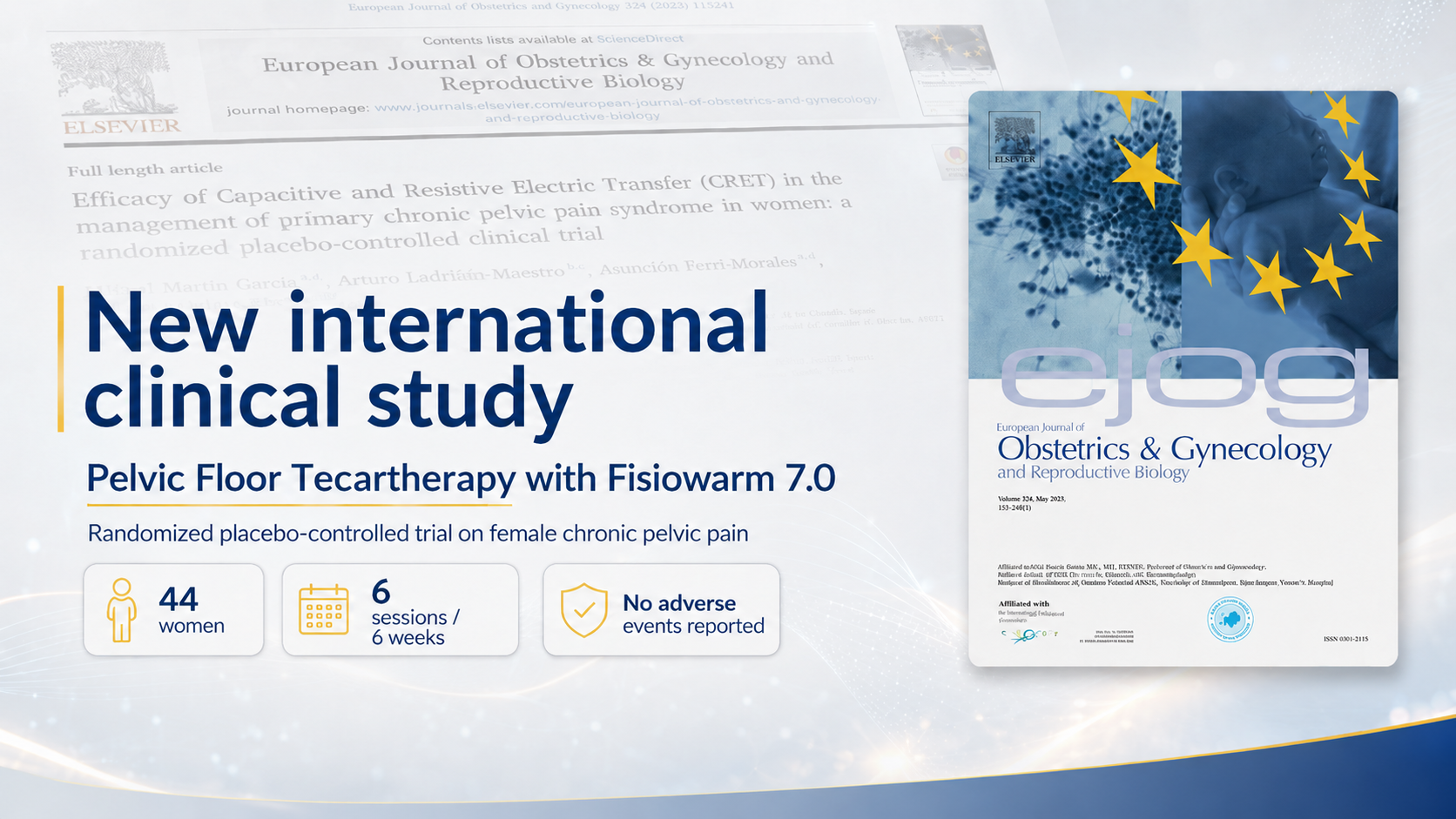
Pelvic floor Tecartherapy is entering a new phase of clinical evidence in female pelvic health and urogynecological rehabilitation.
A new multicentre, randomized, placebo-controlled clinical trial, published in the European Journal of Obstetrics & Gynecology and Reproductive Biology, evaluated the use of Fisiowarm 7.0 in women with chronic primary pelvic pain syndrome and pelvic floor hypertonia.
The study used a protocol including both external application and intracavitary resistive application, assessing the effects of Tecartherapy on pain, quality of life and resting pelvic floor electromyographic activity.
Pelvic Floor Tecartherapy: A New Field of Clinical Interest
Female chronic pelvic pain is a complex condition, often associated with persistent pain, reduced quality of life, sexual health implications, urinary or bowel symptoms and pelvic floor dysfunction.
In many patients, pelvic floor muscle hypertonia or overactivity may contribute to symptom persistence. For this reason, pelvic floor rehabilitation is becoming an increasingly relevant clinical field, where Tecartherapy can be integrated into professional protocols dedicated to female pelvic health.
The Study: Fisiowarm 7.0 in Pelvic Floor Rehabilitation
The study involved 44 women with chronic primary pelvic pain syndrome and pelvic floor hypertonia.
Participants were allocated to two groups:
an active treatment group using Fisiowarm 7.0;
a sham/placebo control group.
The protocol included 6 sessions over 6 weeks, with one weekly session. Each session included:
an external application phase;
an intravaginal application phase with an intracavitary resistive electrode;
the use of Fisiowarm 7.0.
The main outcomes assessed were:
pain using the VAS scale;
quality of life using WHOQOL-BREF;
resting pelvic floor electromyographic activity;
follow-up at 6 weeks after treatment.
Observed Results: Pain, Quality of Life and Pelvic Floor Activity
The active treatment group showed significant improvements compared with the placebo group.
Pain measured with the VAS scale showed a relevant reduction in the Fisiowarm 7.0 group, maintained at 6-week follow-up.
According to the published data, median VAS in the active treatment group decreased from 63 mm at baseline to 10 mm at 6-week follow-up. In the sham/placebo group, median VAS changed from 67 mm to 57 mm.
Resting pelvic floor electromyographic activity also decreased more in the active treatment group. Median sEMG changed from 14.4 µV at baseline to 7 µV at 6-week follow-up.
The study also reported improvements in quality of life domains, particularly in physical and psychological health.
No Adverse Events Reported in the Study
A relevant point concerns treatment tolerability.
No adverse events were reported during the treatment period or at follow-up. In addition, all participants completed the treatment pathway planned in the study.
This aspect is particularly important in pelvic floor rehabilitation, where comfort, perceived safety and treatment acceptability are central elements in clinical practice.
Intimity and Fisiowarm 7.0: Intracavitary Tecartherapy for the Pelvic Floor
The Intimity intracavitary probes are designed for professional use with Fisiowarm 7.0 in pelvic floor physiotherapy and rehabilitation treatments.
Intracavitary Tecartherapy allows those working in pelvic floor rehabilitation to operate in a targeted way within professional protocols dedicated to female pelvic health, integrating Fisiowarm technology into a pathway based on clinical assessment, specialist expertise and therapeutic appropriateness.
The publication of new international clinical data on the use of Fisiowarm 7.0 in chronic primary pelvic pain syndrome represents a further point of interest for those working in pelvic floor rehabilitation, chronic pelvic pain management and urogynecological physiotherapy.
Tecartherapy and the Pelvic Floor: A New Clinical Perspective
Tecartherapy is no longer associated only with musculoskeletal rehabilitation or sports physiotherapy.
Clinical evidence is progressively expanding its field of application to pelvic floor physiotherapy, chronic pelvic pain management and urogynecological rehabilitation protocols.
With Fisiowarm 7.0 and Intimity intracavitary probes, Tecartherapy can be integrated into specific pathways based on clinical assessment, specialist expertise and therapeutic appropriateness.
Request an Intimity Demo with Fisiowarm 7.0
If you work in pelvic floor rehabilitation, you can request a dedicated demo to learn more about intracavitary application with Intimity and Fisiowarm 7.0.
Discover how to integrate Tecartherapy into professional protocols dedicated to female pelvic health.
Request an Intimity demo with Fisiowarm 7.0
Scientific reference
Martin García M., Ladriñan-Maestro A., Ferri-Morales A., Sanchez Sierra A. Efficacy of Capacitive and Resistive Electric Transfer (CRET) in the management of primary chronic pelvic pain syndrome in women: a randomized placebo-controlled clinical trial. European Journal of Obstetrics & Gynecology and Reproductive Biology, 2026.
Link to the scientific article
Note
The results reported refer to the published study and to the sample analysed. The information on this page is intended for healthcare professionals and does not replace the clinical assessment of the competent healthcare provider.