Tecartherapy
Table of contents
The use of heat as a treatment for the most varied pathologies has been known for many years. Tecartherapy provides relief in chronic, traumatic and inflammatory conditions, increases blood flow improving cell nutrition and oxygenation and accelerating the disposal of toxins; it improves the extensibility of connective tissue, reduces joint stiffness, pain and muscle spasm, facilitates the reabsorption of hematomas and edema.
Fields of application of Tecartherapy
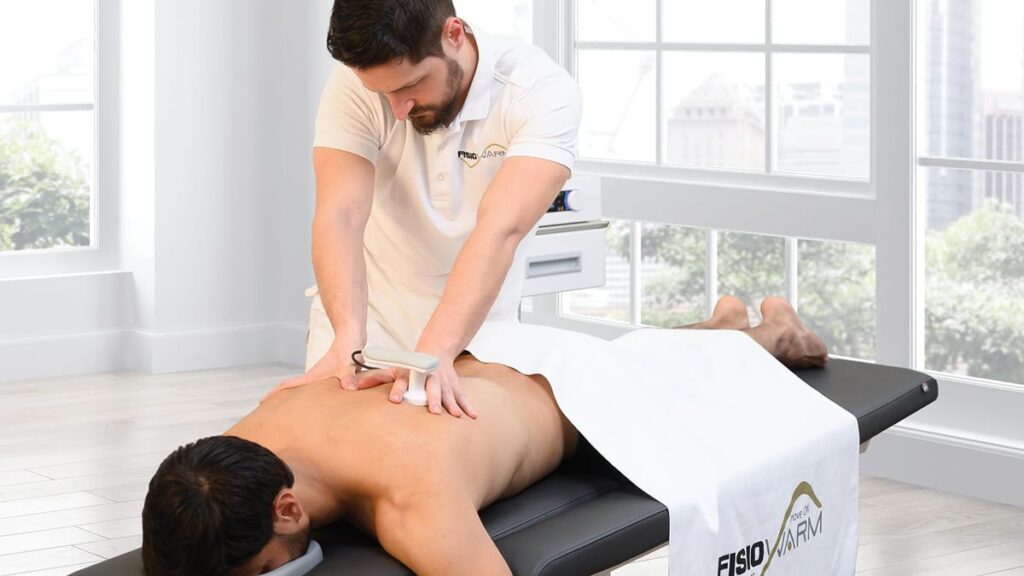
The application to a biological tissue of an electric current field, equipped with the appropriate characteristics of power, frequency and waveform, provides energy to the substrate restoring the chemical-electrical balance compromised by the pathological event.
This is the theory that justifies its use in physiotherapy. Each individual cell participates in the regenerative function of the tissue through morphological and chemical-electrical interactions.
The thermal action, providing immediate relief to the inflamed or injured area, clears the way for mechanical action, which can therefore persist longer and more deeply and, unlike the therapeutic indications of the classical methodology, even by reiterating the sessions and placing them close together without risk of interference on the tissues.
The new Fisiowarm® devices are able to deliver energy by exploiting a different form of interaction between electric fields, which refers to the physical model of the capacitor, without using high voltage. The transfer methods are multiple and customizable, and are characterized above all by the fact that heat is generated directly inside the tissues, managing to treat previously inaccessible pathologies. The tissues are infused with energy in depth, without the skin surface being crossed by any form of direct projection.
Fields of Application of Tecartherapy


Effective Tecartherapy Treatment
Treatment area and target tissue of Tecartherapy
Too often the patient ends up on the treatment table and is stretched like a shirt! Using Tecartherapy as an “iron” is harmful not only to the Tecartherapy brand but also to all of Physiotherapy. The physiotherapist must first have competence in the clinical assessment of the patient and only then can design the most appropriate treatment plan. During Fisiowarm Edu Hub courses we use an evaluation process that includes:
✔️ Medical history and clinical history. Time and symptom progression, in particular, give us important indications on the patient’s prognosis.
✔️ Specific questions for understanding pain (topography, intensity and quality of symptoms, time and frequency of occurrence, etc.) and questions about activities or postures that reduce or eliminate pain and finally questions about intensity based on times of day.
✔️ Body Chart. An anatomical table where to draw the topography and note the quality of symptoms and the temporal sequence in which they appear.
✔️ Special Questions. Such as illnesses, medication use, recent or significant pathologies or surgical interventions to have criteria for evaluating any contraindications and/or red flags.
✔️ Specific tests. District orthopedic, extra-district, neurological and neurodynamic tests.
✔️ Instrumental Examinations. Review CT scans, MRI, X-rays or Ultrasound that the patient has with them that can add sensitive elements to our clinical reasoning.
Only after clinical reasoning is it possible to identify the origin of symptoms and understand which tissue or body area we must focus on and create an integrated and modern treatment plan; Manual therapy + physical therapy + therapeutic and/or functional exercise.
Capacitive or Resistive Treatment? The Most Effective Tecartherapy
“Impedance in medicine is the characteristic of each tissue to allow a current to pass through”.
How many times, using Tecartherapy, have we decided to use Capacitive and Resistive in the same session because we didn’t know which to choose?
Many companies, perhaps too many, have recommended 10 minutes of Capacitive to open and close the session and 10 minutes of Resistive with a presumed greater analgesic effect. Let’s clarify!
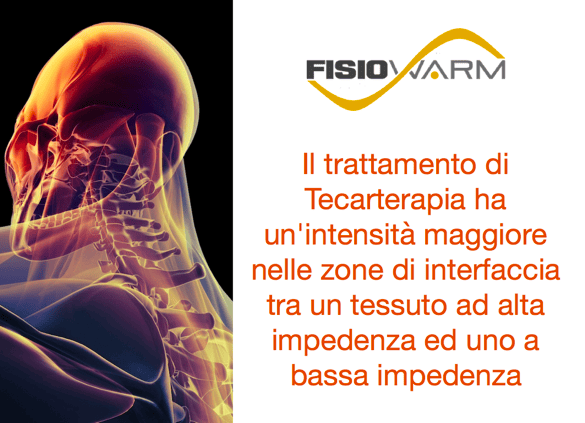
Electric current, this is what we’re talking about, travels through the body and releases more energy in areas with large impedance variation. More specifically, it is in the interface areas between high and low impedance that more energy is released (e.g. between bone and soft tissues).
Current always chooses the path with less difficulty (low impedance), so it will never pass inside a bone but will release energy in the outer portion due to the principles we have just explained. Understanding this, it is simple to understand the difference between Capacitive and Resistive.
Resistive is a non-insulated metallic electrode that will tend to release energy where it encounters an impedance difference.
If immediately below the electrode we find a high impedance tissue (such as a bone or a large tendon) most of the energy will be dissipated more superficially; if instead the difference between high and low impedance is found deeper we must pay close attention to the current path. The current path is determined by the position between plate and electrode. From this it is immediately clear that with Resistive it is necessary to know how to work well with geometries.

In Capacitive, unlike Resistive, the surface in contact with the body is normally covered by a layer of insulating material. This insulator constitutes by intrinsic characteristics of the material itself the high/low impedance interface once in contact with the skin so as to generate energy in the superficial areas beneath the electrode regardless of the biological tissue between the capacitive electrode and the neutral plate. However, this construction solution requires the use of very high voltages (in the order of 1000 Volts) applied to the electrodes. This can result in significant shocks or electrical injuries to patient and operator in case of damage or wear to the insulating film or the capacitive cable/handpiece.
Fisiowarm overcomes this criticality by adopting an innovative LOW VOLTAGE CAPACITIVE SAFE technology that makes capacitive therapy safe and the result more performant, with no more risks for operator and patient.
Effective Geometries of Tecartherapy
By Geometry in Tecartherapy we mean the path that the current takes in the patient’s body in relation to the position between plate and electrode.
There are so-called “Correct Geometries” which are those that see the parallel positioning between plate and electrode where the geometric projection of the electrode ends in the center of the return plate.
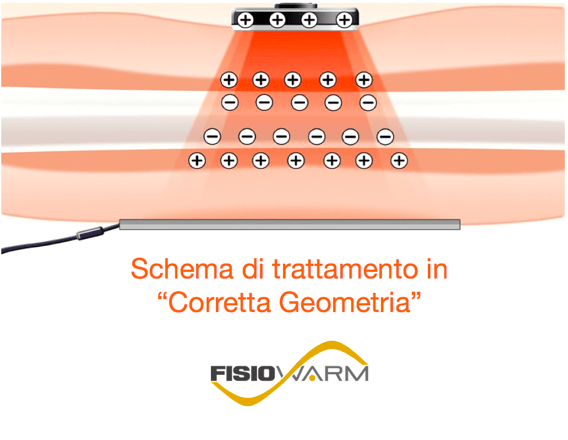
With this type of geometry we have a very clear understanding of the passage of current inside the body and how energy will be released. In fact, in a treatment with the Resistive system, in correct geometry, we will only need to know the anatomy of the structures located between plate and electrode and based on the different impedances of the tissues we will know where and how the energy will be released.
To better understand this important concept, imagine the current flow as if it were a water flow, the riverbed as a muscle and the pylon as the bone; now imagine being on a bridge and looking down near the pylons supporting the bridge; you will see that the water hitting them will produce turbulence nearby.
This turbulence will be greater the narrower the riverbed is (the water has little possibility to escape) while it will be less the wider the riverbed is (the water will be able to flow away from the pylons creating less turbulence); this is what also happens in our body. Returning to the example of correct geometry, it must therefore be considered that, even if the geometry is correct but the bone surface is minimal compared to the muscle surface present in the same area, the current, as we know, will choose the simplest path and therefore the musculature, producing an irrelevant amount of heat in the bone/muscle interface.
It should always be remembered that the Capacitive system will have a significant percentage of energy sequestration directly in the first layers under the electrode, so the position of the return plate has less relevance in the treatment.
When instead it is not possible to work in “correct geometry” it is necessary to pay close attention to the path that the current will take.
If the path between plate and electrode is too long there is a risk of releasing energy to tissues not directly connected to the problem and more generally higher powers must be used; it is therefore useful to select a short path that includes our application target and takes into account the anatomy of the body area involved.
In conclusion, it is useful to remember that, preferably, all electrodes (Capacitive, Resistive and Neutral) should not be positioned directly on bone surfaces but on “soft” surfaces for the benefit of patient comfort but above all for a more homogeneous current distribution.
Application Methods of Tecartherapy
The application of Tecartherapy can be done in different ways:
- Basic application
- Integrated application with massage therapy
- Integrated application with manual therapy
- Integrated application with therapeutic exercise
In basic application, the physiotherapist, after placing the plate, moves the electrode on the area to be treated to create energy homogeneity in the target area. An application can last 15/20 minutes for a single body part but may require longer times when treating a larger area, such as the entire back.
In integrated application with massage therapy, the physiotherapist adds massage therapy maneuvers to the basic application to have better effectiveness particularly on muscle tissue.
The application of Tecartherapy with massage therapy allows the physiotherapist to continuously perceive muscle tensions and act more intensely where necessary.
The pleasantness of the treatment, especially in this combination, represents one of the treatment’s strengths.
In integrated application with manual therapy, the physiotherapist uses the electrode as if it were an extension of their hand to move joints stiffened by degenerative or traumatic processes, combining the therapeutic effect of Tecartherapy with the specific effect of joint movement.
In integrated application with therapeutic exercise, the physiotherapist can choose plate and adhesive electrodes or use two handpieces so that the patient can perform active exercises while performing the therapeutic session. This last method is extremely powerful as it allows working directly on movements that may be limited or painful, producing faster functional recovery.
To implement the treatment method in combination with Kinesiotherapy, manual therapy or therapeutic exercise, the physiotherapist could choose particular geometries between plate and electrode or particular accessories in order to facilitate joint movement.
Use of accessories
In recent years FisioWarm has created an extraordinary line of accessories that has inspired many other companies.
The accessories improve treatment and energy delivery in all body areas and lend themselves to various therapeutic integrations.
Dynamic Neutral
With the Dynamic Neutral® system, the physiotherapist can create the best geometries for each treatment area.
Dynamic Neutral®, as the name suggests, involves the use of two handpieces, one of which houses the active electrode while the other houses the neutral electrode which becomes dynamic. This particular configuration allows the therapist and patient greater treatment freedom with all the therapeutic advantages this entails:
- it is possible to perform the application while the patient performs exercises or follows the instructions received from the physiotherapist as they are not physically bound to the plate;
- the application benefits from the possibility of channeling energy in a more selective way and only where necessary with adequate power, avoiding involving other areas not to be subjected to treatment;
- during the same treatment the physiotherapist can vary the “path” of the current, adapting it from time to time to obtain the best therapeutic result;
- it makes treatments possible that were previously unthinkable, such as three-dimensional treatment of the joint.
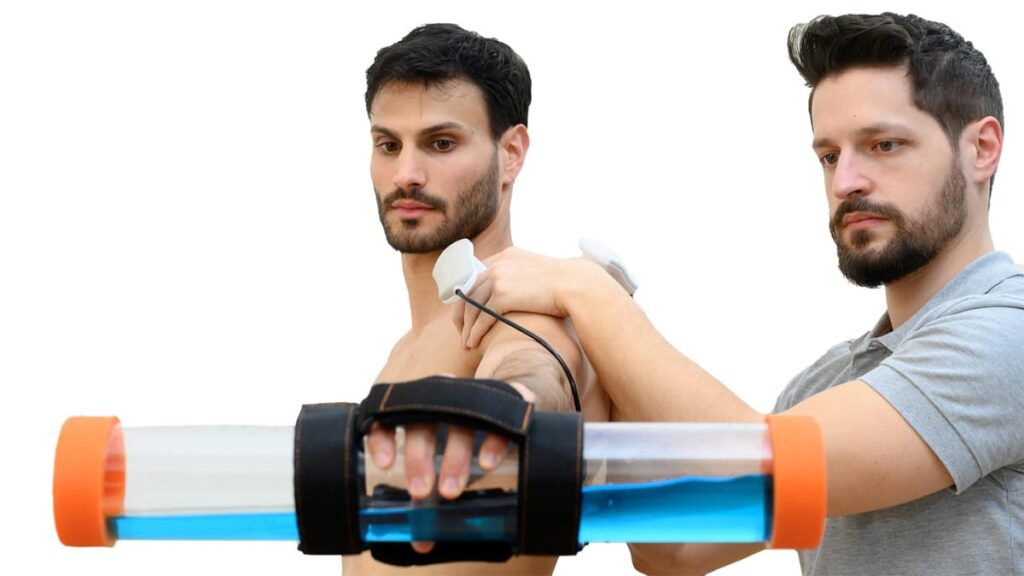
The Dynamic Neutral kit is completed with other special accessories such as the “wearable” which makes the physiotherapist’s work more comfortable and the electrode movement on the patient even more natural. The evolution of these accessories is continuous and is only possible through dialogue with FisioWarm users in Italy and around the world. FisioWarm Tecartherapy is in fact distributed in over 25 countries worldwide and it is thanks to user feedback that it constantly evolves technologically.
Static Automatic
The Static Automatic kit was created to allow the patient to work actively during Tecartherapy treatment.
The electrodes can function as active electrode or neutral electrode depending on the application methods.
The energy delivered by Tecartherapy facilitates collagen extensibility, increases blood perfusion in tissues and thanks to heat has an analgesic effect. This allows creating specific exercise sequences for each patient, combining the effects of physical therapy with those of movement.
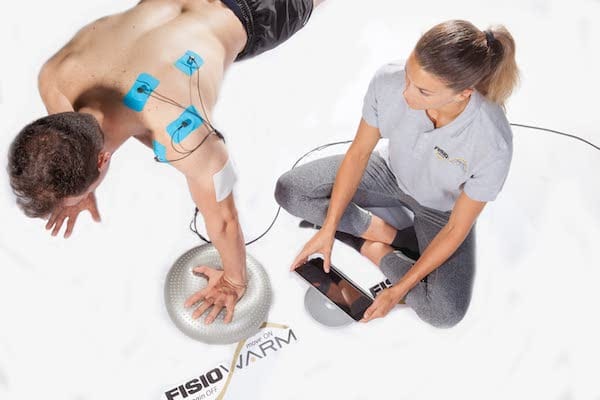
In this way, not only can the patient’s dynamism be maximized, the physiotherapist also has the advantage of being able to choose whether to accompany the patient during exercises with both hands or manage other therapeutic aids (for example the ball). This translates into more dynamism, more comfort, more treatment effectiveness particularly in sports patients during post-traumatic recovery.
Bipolar Electrode
The Profile resistive bipolar electrode (registered model) was born from an original Golden Star idea and contains both active/neutral electrodes in a single structure. Equipped with mobile heads capable of faithfully following the profile of the underlying body surface, it makes the application simpler for the operator, more targeted and concentrated and more pleasant for the patient. This application method allows treating superficial areas in those body districts where it is more difficult to use the return plate.
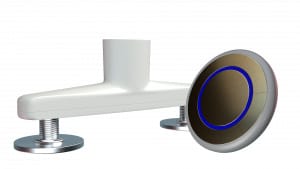
Its use is recommended for tendon pathologies of the hand, wrist, elbow, shoulder and knee. This electrode is also defined as paravertebral, in fact its conformation and adjustable heads allow treatment of the muscle and tendon structures of the spine located more superficially. In specific pathologies of soft tissues, especially in tendinitis, better results are found with applications as circumscribed as possible to the site of the lesion or inflammation.
The Capacitive bipolar electrode: this particular electrode allows the application of Tecartherapy without the need to apply the return plate. It is very effective for treating superficial problems, particularly for treating scars or lymphatic drainage work.
The Capacitive bipolar electrode can also be used in combination with pre-competition massage in sports, the absence of the plate allows greater application simplicity especially when multiple body districts and muscle groups must be treated in a short time.
Conductive Cream
Conductive cream is a fundamental element for correct and effective application; its composition is designed to ensure excellent electrical conductivity, maintain the right density during therapy limiting excessive absorption by the body, soften the skin without being greasy.
It is important that the cream has an appropriate CE certification to be used for Tecartherapy treatments.
Yes, the price of Tecartherapy cream is important for the management of a medical practice but it is more important that it is a certified product, quality, tested and approved as the best to ensure correct application performance with that/those specific devices, certified by the manufacturer as not being harmful to electrodes, handpieces and cables. It is an element that deserves great attention and also for this reason more and more health inspectors verify the presence of this certification during inspections in medical facilities. Tecartherapy cream is not a mere cost to be sustained on which to seek savings but is a matter of research by companies and attention to performance and patient health by the physiotherapist.
During treatment the quantity of cream must always be constant as the cream thanks to its composition favors conductivity and therefore energy transfer.
Not using it or using too little is an error of inexperience and forces working with higher energies, increasing the energy dose on the patient for no reason. A scarce quantity of cream or its low quality can give rise (especially in Capacitive treatment) to pinpoint current passages with the typical and annoying sensation of “pinpricks” that occur in the part underneath the electrode used.
Another \, due to the risk of burns, is to perform Tecartherapy treatments without applying conductive cream on the return plate.
Tecartherapy was not created with the purpose of conveying substances inside the body and there is currently no scientific evidence on this topic. Despite this, some specific easily ionizable topical products, with the active ingredients contained in them, can be more easily absorbed locally thanks to the effect of increased microcirculation.
The result we can obtain is that of a modest improvement in absorption compared to topical application alone of the same product. The most important characteristic of the cream to optimize treatment is electrical conductivity.
Another important element is the cream’s behavior at high temperatures. Some produce an “oil effect” at the end of treatment, much appreciated by physiotherapists. Smoothness is an important element but sometimes certain creams under the effect of electric current and heat produce chemical reactions and “pH” variations that can damage electrodes and perhaps also be harmful to the health of the patient’s and operator’s skin.
Specifically for the Fisiowarm 7.0 product, Fisiowarm Cream conductive cream is a class I medical device, accessory to the equipment itself of which it is a fundamental part for its correct functioning. It guarantees safety for application and compatibility with accessories. The use of creams other than Fisiowarm Cream results in voiding of the warranty on accessories (electrodes, cables, handpieces).
Parameter Management
Power, power, power! It seems to be the most important parameter for a physiotherapist who is about to purchase a new or used Tecartherapy device.
Is it really that important? Or are there other parameters that can significantly affect treatment effectiveness? Frequency for example is a very important parameter but it is necessary to clarify a bit. Some companies believe they have identified frequencies that are more effective than others. These frequencies are all between 400 and 500 KHz.
First of all, it should be clarified that there are no patented frequencies and that clinical evidence and the very few studies on Tecartherapy produced over time always refer to different frequencies. Furthermore, especially equipment produced until a few years ago had error percentages in the delivery of declared frequencies of at least 5%-10%.
However, we can affirm that frequencies around 500 KHz are certainly the most used, lower frequencies (down to 300 KHz) are effective for deep treatments. Higher frequencies, up to 1000 KHz are used for more superficial treatments. Electric current in fact with increasing frequency tends to distribute more in the outermost area of the conductor it passes through, the so-called “skin effect”. Another important parameter in treatment setup is signal pulsation (duty cycle), which expresses the ratio between emission time and pause time.
Pulsed mode in Tecartherapy is useful for managing thermal gradient (ATHERMIA) which will be progressive for pathologies from acute to chronic. With old-concept devices in the case of a pathology in acute phase, one would simply keep the delivery intensity at minimum obtaining very few results with the device almost off.
Today instead with Fisiowarm we can choose between different athermia gradients keeping the biological effects of current passage unchanged while at the same time keeping low the deleterious thermal effect in acute phases. The introduction of this new parameter allows modulating treatments specifically for each therapeutic phase. Finally, the introduction of SUPERPULSED delivery mode (available on the 400 model) in total absence of thermia represents the new frontier of Tecartherapy.
Therapeutic Associations
Manual therapy and osteopathy seemed until a few years ago very distant from Tecartherapy. Indeed, to tell the whole truth, the culture of opposition between physical therapy and manual therapy is a way to conquer the minds of young physiotherapists and therefore condemn them forever to not doing therapeutic integration.
Today with the right settings of physical parameters and with the use of modern accessories (handpieces and electrodes) it is possible to perform high-level integrated treatments. Those who have more than 20 years of experience and have lived, studied and applied physical therapy and in particular Tecartherapy know how useful it can be to support manual therapy treatments.
Today Tecartherapy is safer and more effective than 20 years ago. At the same time, physiotherapists have grown and clinical assessment capabilities have grown precisely thanks to manual therapy. Understanding what the origin of symptoms is the basis of our work, then we can and must use the most effective techniques and tools for our patient.
Therapeutic Indications
Heat provides relief in chronic traumatic and inflammatory conditions, increases blood flow promoting cellular nutrition and toxin disposal, improves connective tissue elasticity.
The vasodilation obtained with heat causes an increase in substance exchanges that favors drainage of the inflamed site and local influx of cells responsible for reparative processes.
- Contusive or distorsive traumas
- Post-surgical rehabilitation
- Sports traumatology
- Muscle and tendon pathologies
- Scar outcomes
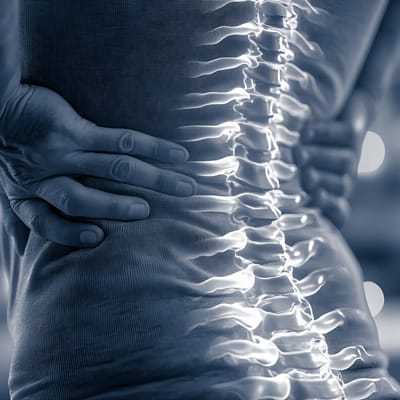
- Pathologies of the spine and peripheral joints
- Pathologies of the vascular and lymphatic system
- Pathologies of the nervous system (of orthopedic origin)
- Pelvic floor rehabilitation Dermatofunctional Physioaesthetics
Fisioestetica Dermatofunzionale
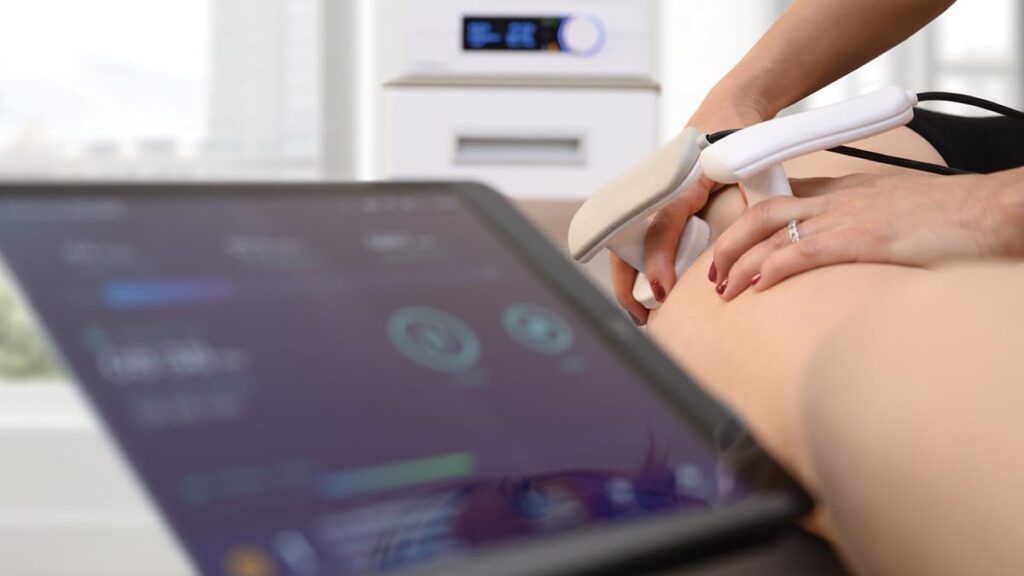
The energy delivered by Fisiowarm 7.0, through specific modes and electrodes dedicated to each treatment area, promotes an important biological stimulus of the treated tissues, allowing better oxygen and nutrient flow, favoring the elimination of inflammatory substances and excess fluids.
It has been more than 20 years that Tecartherapy has been highly effective also in the field of aesthetic medicine and in the post-intervention phases of plastic surgery. By biostimulating tissues it contributes to repairing the skin, lightening scars, firming the dermis also stimulating the disposal of toxic catabolites and elimination of free radicals.
FOR THE FACE
Due to its cell stimulation action, through Tecartherapy, the skin receives greater blood flow and therefore better oxygenation, which positively impacts surface cells as well as the deep dermis. It has an immediate lifting effect action on collagen fibers, with consequent tensioning effect of the treated area.
FOR CELLULITE TREATMENT
By increasing blood flow velocity, Tecartherapy generates an increase in oxygen production that promotes metabolic activities and toxin disposal. By reducing inflammation, it improves venous and lymphatic stagnation through synergistic use with specific massage techniques.
FOR TISSUE FIRMING
Tecartherapy used with specific power, frequency and treatment time settings, stimulates blood and lymphatic microcirculation with consequent improvement in the tone of the treated skin. Optimization of results is also obtained with the tensioning effect performed by the muscle groups underlying the area which can be trained during treatment.
To obtain important and lasting results over time, it is always recommended to create multidisciplinary therapeutic pathways that include improvement of the patient’s lifestyle, a correct nutritional path, targeted therapeutic exercise and if necessary the insertion of other physical therapies supporting the treatment.
Tecartherapy and Pelvic Floor
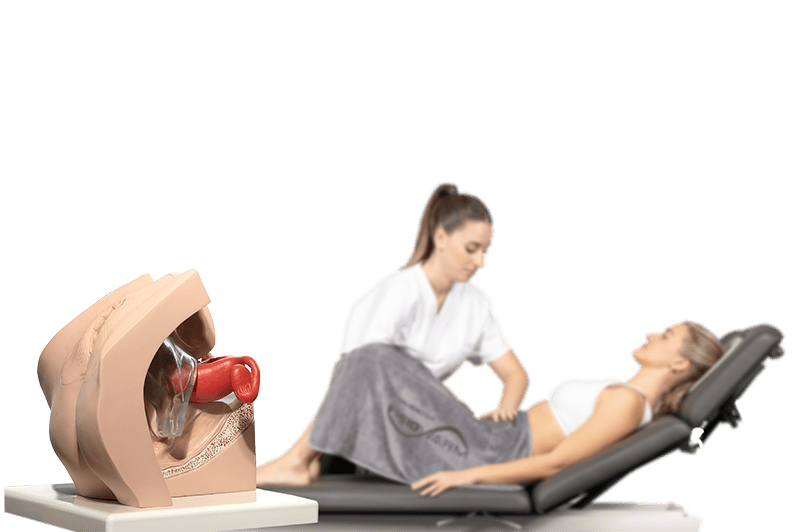
The most innovative approach to Pelvic Floor problems is with Tecartherapy. This method, widely used for years for all other muscles, has finally entered the service of the Perineum.
Widely used in Spain for all pelvic problems thanks to its ability to oxygenate tissues, restore balance to muscles and mucous membranes, for its great effectiveness in increasing vascularization and muscle relaxation and for its analgesic action, it is the ideal treatment for functional recovery of the pelvic-perineal area.
During the rehabilitation cycle, the physiotherapist can also use specific accessories for internal and external treatment of the area, for strengthening internal muscles, and for manual treatment combined with Tecartherapy.
Pelvic floor rehabilitation is a clinical practice with a long history but only in recent years has it had, at least in Italy, an acceleration of its dissemination process: why?
Among the main reasons is the fact that the entire sphere of the pelvic floor and what concerns it (genital organs, reproductive and excretory apparatus) still remain a taboo. One rarely hears talk of physical problems during sexual intercourse, urine leakage after childbirth or pain during menstrual cycle.
Certainly this is due to the fact that these are intimate topics, but at the same time the lack of information condemns many people to remedies that are only palliatives, or that have the purpose of “limiting damage,” only because they do not know that there could be a definitive or perhaps more complete solution through the help of a specialized physiotherapist. Sometimes even “just” a specific exercise program can bring great satisfaction!
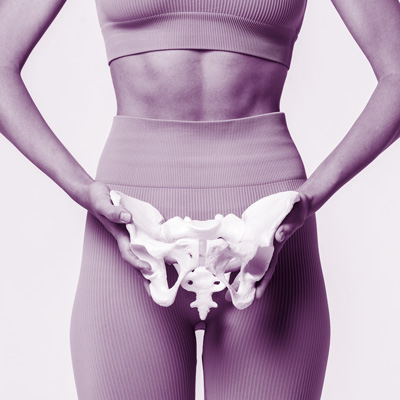
Called so for its position, the Pelvic Floor is the structure that closes the lower part of our pelvis. It is composed of ligaments, fascia and muscles, which together collaborate in its functions: support, continence, ability to contract and relax.
It has the shape of a hammock, above which the pelvic viscera are located. Its shape and position make it subject to pressures generated inside the abdomen when it contracts.
More generally, pelvic floor rehabilitation concerns not only women but also men. Among the main characteristics is in fact the treatment, prevention and care of incontinence conditions, whether fecal or urinary, which can be present in both females and males.
The element that characterizes this aspect of physiotherapy is certainly the awareness of this part of the body, which is very often unknown. Tecartherapy is an important ally of the physiotherapist for treating the main pathologies of the pelvic floor.
For this reason, the first great work that the physiotherapist performs in this area is certainly to use a series of strategies that allow the patient to become aware of the pelvic musculature, to know it, and subsequently move on to specific exercises, which may have the purpose of strengthening or relaxing the musculature.
The main dysfunctions of the pelvic floor are:
- urinary incontinence;
- prostate hypertrophy;
- anatomo-functional disorders of the sexual sphere;
- pelvic pain and post-partum recovery;
- functional disorders of menopause;vaginal dryness;
- muscle tone dysfunctions (hypotonia/hypertonia).
Risk factors in men are mainly iatrogenic such as prostate and/or urethral surgery.
Pathologies of the spine and peripheral joints;
Pathologies of the vascular and lymphatic system;
Pathologies of the nervous system (of orthopedic origin);
Pelvic floor rehabilitation.
Given the complexity of this functional area, it is necessary that the operator is adequately trained and capable of creating specific therapeutic pathways for each clinical case.
Fisiowarm follows physiotherapists in their training path with monothematic educational events throughout the national territory and through its EduHub training program.
- Download the Fisiowarm brochure